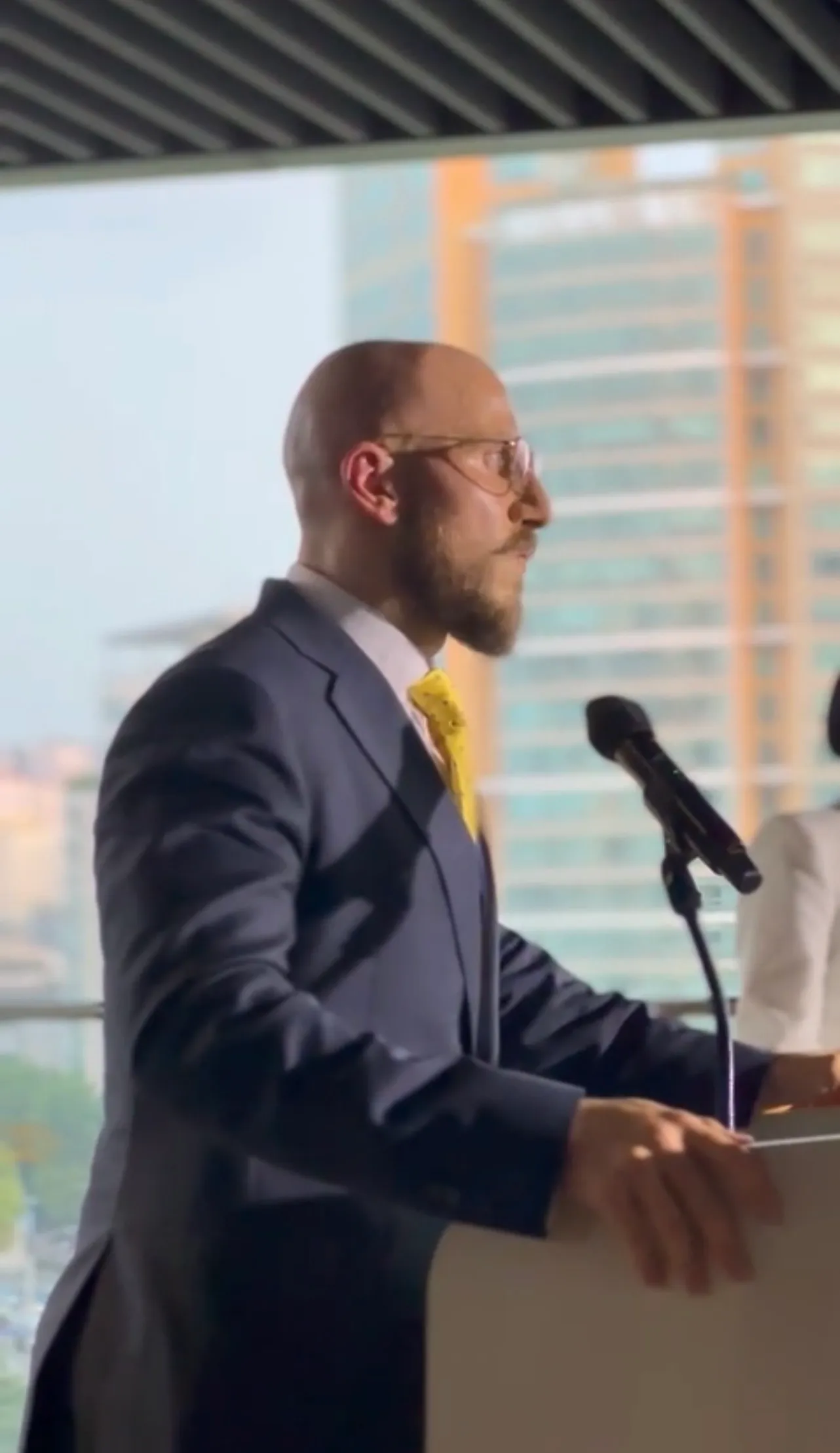
The National Orthopaedic Hospital, Igbobi, in Lagos has cut Nigeria’s outbound medical tourism for orthopaedic and trauma care over eight decades of work, its medical director said, The Nation reported. Dr Wakeel Lawal set out the hospital’s record in specialised care, workforce training and medical education at a press conference in Lagos, held ahead of the hospital’s 80th anniversary. Known as NOHIL, the hospital opened in 1945 as a rehabilitation centre for soldiers injured in the Second World War, and it has grown into a leading orthopaedic and trauma centre for Nigeria and the wider West African sub-region.
Specialised services and outcomes
NOHIL now runs a range of specialised services that let it handle cases once sent abroad, The Nation reported. These take in joint replacement surgery, minimally invasive spine surgery, deformity correction, orthopaedic oncology, arthroscopy, sports medicine, and plastic and reconstructive surgery. A decade or fifteen years ago most joint replacements, deformity corrections and complex trauma cases went overseas, Lawal said, and today “we can confidently manage such procedures in Nigeria with excellent outcomes.” He described NOHIL as a national referral centre.
A training pipeline behind the numbers
Much of the hospital’s weight sits in training. More than 70 per cent of the orthopaedic surgeons practising in Nigeria were trained at NOHIL, The Nation reported, and the hospital runs subspecialty programmes and works with international partners so that its surgeons meet global standards. It also trains allied staff through its College of Nursing Sciences, projected to graduate nearly 100 students next year, and its Federal College of Orthopaedic Technology, which teaches prosthetics, orthotics and orthopaedic cast technology. NOHIL is among the country’s main sites for fabricating these devices for patients with limb challenges.
Challenges, cost and expansion
Beyond the wards, NOHIL runs medical outreaches, free surgeries for poor patients and public health campaigns, The Nation reported, and it has brought in appointment booking to ease overcrowding and long waits. The hospital still faces inadequate infrastructure, funding limits and a shortage of health workers. Lawal said NOHIL spends between N50 million and N60 million each month on electricity alone, and struggles with equipment maintenance and upgrades. To meet rising demand it is expanding its accident and emergency complex, its rehabilitation centre and its outpatient department, and Lawal appealed to government, donors and companies for support, acknowledging past gifts of wards, staff quarters and patient hostels.
The 80th anniversary
The anniversary programme runs to thanksgiving services, awareness walks, community outreach and lectures, with the main event set for May 24, The Nation reported. Former Lagos State governor Babatunde Fashola is expected to speak, and the Minister of State for Health and Social Welfare, Iziaq Salako, will attend as guest of honour. Dr Francis Nwachukwu, the head of clinical services, said the outreach would offer free health screening, along with orthopaedic consultations and referrals.
Patient retention follows specialist retention
There is a lesson in the order NOHIL describes. Patients leave home for care that is better, best, cheaper, faster or simply not to be had, and complex bone and trauma work sat for years in that last box for Nigeria. Closing it did not start with a marketing campaign. It started with surgeons. This is a simple point, and it is easy to miss. It takes a generation, and it takes money. The figure that carries the story is not a patient count but a training one, that more than 70 per cent of the country’s orthopaedic surgeons passed through NOHIL, because patient retention follows specialist retention. A country keeps its joint-replacement and spine cases at home only once it has the surgeons, the operating theatres and the fitting rooms to take them. NOHIL has spent 80 years building that stock, and there is no fast way to build it.
That is the lasting way to keep care at home, and it holds across borders. A hospital that trains most of a nation’s specialists in a field becomes the first place patients are sent in that field, and the flow abroad shrinks as a result. The claim can be tested, and it is a strong one. It predicts that the fields where Nigeria still loses patients abroad are the ones with no NOHIL-scale training base behind them.
There is a wider point here, and it is easy to state. Money and new buildings move fast, but people do not. A new wing can go up in a year, and a machine can be bought and shipped in months. A surgeon takes ten years to train, and a whole class of them takes far longer than that. So the places that keep their patients at home are the ones that started on the slow work early. NOHIL started in 1945. That gap in time is the real edge, and it is why the training number matters more than the building plans.
The dull machinery before the brand
NOHIL’s stated aim is to become a globally competitive orthopaedic centre. That would turn a hospital that stops patients leaving into one that draws them from abroad. The gap between those two is measured in the plain items on Lawal’s own list. A hospital that spends up to N60 million a month on power alone, and struggles to keep its equipment running, is not yet ready to advertise for foreign patients, however good its surgeons. The money is the hard part here, not the will. A destination is built from the dull machinery first, from power, staffing and safe standards, and only then from the brand.
The sensible reading is that NOHIL has already done the harder half. It has changed where Nigerian patients are treated, a shift in habit and in medicine that takes decades, and it holds the training base to keep the gain. That is a fair place to stand, but it is only half of the job. The tests from here are plain. Whether the expanded emergency, rehabilitation and outpatient units open on schedule will show if the buildings are catching up to the clinical record. Whether the power and equipment problems ease will show if the machinery can carry that aim. And the share of Nigeria’s orthopaedic surgeons trained at NOHIL, tracked over the next decade, will show whether the pipeline that closed the outbound flow can widen into the other fields where patients still travel.