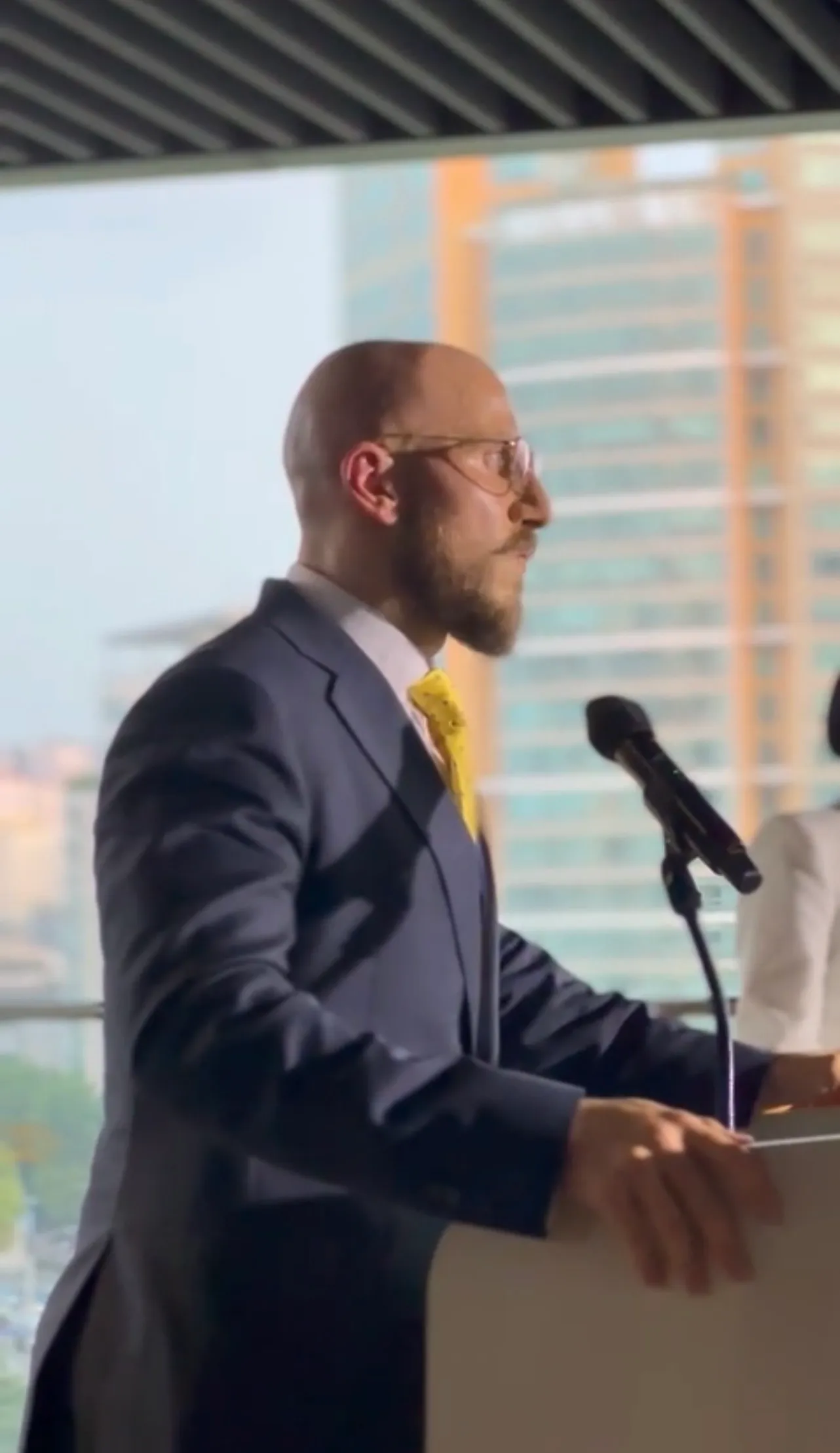
Lagos State has spent between six and eight years reforming its hospitals to slow the outbound medical travel that drains billions of dollars from Nigeria each year, a business forum in the city heard, The Nation reported. Segun Ogboye, the immediate past permanent secretary of the Lagos State Ministry of Health, said the reforms were meant both to keep Nigerian patients at home and to draw patients from other African countries. He was speaking at a Nigeria-South Africa Chamber of Commerce breakfast forum themed “Global Care, Local Confidence: Positioning Nigeria in the Medical Tourism Value Chain”.
The money that leaves
Ogboye described healthcare as a large global business and said Nigeria loses billions of dollars a year to foreign hospitals, The Nation reported. Estimates cited at the forum put the outflow at between 1.2 billion and 2 billion dollars a year from 2020 to 2022. The range has moved with the exchange rate and with the way patients pay. He traced the loss to weak infrastructure, skills gaps and a lack of public trust in local facilities. Nigerians who travel do so mostly for oncology, cardiac procedures and kidney transplants, and mostly to India, Britain, the United States, South Africa and Turkey.
What Lagos is building
The reforms rest on three planks, Ogboye said: more hospital infrastructure, wider access to specialist care and stronger public-private partnerships. He pointed to the new Massey Children’s Hospital, described as one of the most advanced paediatric centres in sub-Saharan Africa. The Lagos State University Teaching Hospital is being upgraded for executive screening and specialist work. The state has also concessioned the Medipark medical complex to private investors to build faster, The Nation reported. For now the Medipark site is a concession on paper. The gaps are as clear as the plans. Nigeria still lacks specialists, equipment is costly to buy and harder to maintain with so few biomedical engineers, and too many locally trained doctors have gone abroad, Ogboye said; hospitals that lose their skilled staff, he warned, become “museums”. Insurance is the weaker leg. Roughly 70 per cent of health spending in Nigeria is still paid out of pocket, among the highest rates anywhere, and though Lagos has mandated health insurance, enrolment remains low, which limits the money reaching hospitals.
A source market trying to become a destination
Ije Jidenma, who chairs the Nigeria-South Africa Chamber of Commerce, told the forum that Nigeria had long sat on the wrong side of the trade, sending patients out rather than taking them in. She put the annual loss at between 1 billion and 2 billion dollars, driven by demand for oncology, cardiac surgery and transplants. Jidenma read a recent fall in that spending as an opening rather than a win. Foreign exchange had grown scarce, she said, and more procedures were now being done inside Nigeria as a result. “Confidence fuels demand, demand attracts investment,” Jidenma said, and without local confidence medical tourism cannot grow. She pressed for internationally accredited hospitals, medical visas and a national branding effort to compete with India, Turkey and Thailand.
A fall driven by scarce foreign exchange is a symptom, not a strategy. It records that patients cannot afford to leave, not that they have chosen to stay, and it reverses the moment the currency eases. The durable version of the same number is different. It is a source market that keeps its patients because the care at home is good enough to hold them, which is the harder thing Lagos is trying to build. Nigeria’s outflow has long run to a short list of countries, and that concentration is the point: India in particular has absorbed much of the traffic, and the continent as a whole loses billions a year to hospitals abroad.
What to watch
The test is dated and countable. If Lagos is building a destination rather than riding a weak currency, the Massey Children’s Hospital and the upgraded teaching hospital will show foreign patients on their books, insurance enrolment will climb off its low base, and the outflow will stay down once the naira steadies. If the spending abroad climbs again the moment foreign exchange loosens, the reforms will have been an announcement rather than a capacity. Segun Ogboye’s own test was plainer, that Lagos can hold its own patients and pull in West Africa’s once the building is done and the health workers stay.
