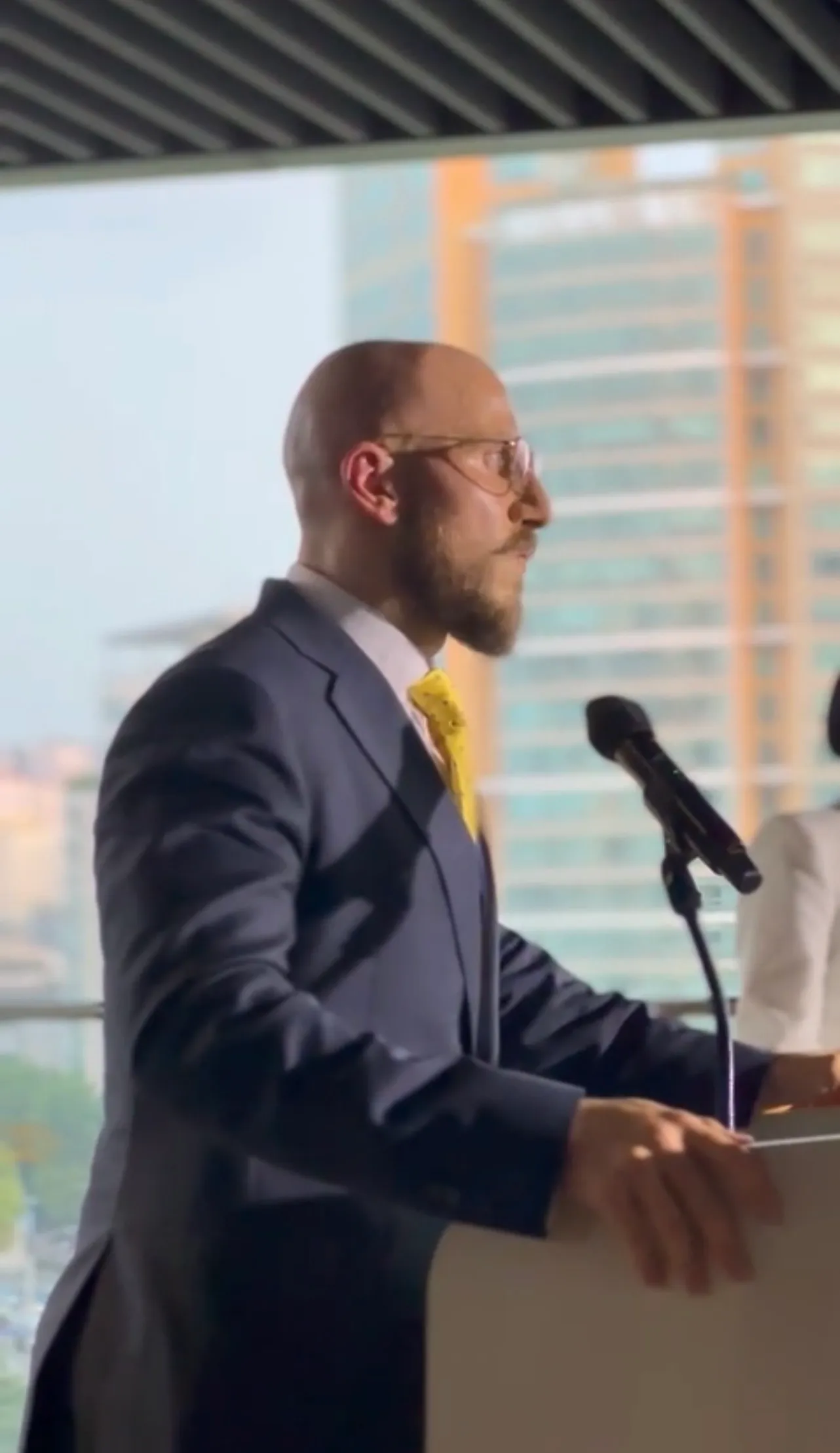
Lagos State’s government has set out a package of healthcare reforms built around wider health insurance, a smaller funding gap and a reversal of outbound medical tourism, The Nation reported. Its commissioner for health, Akin Abayomi, announced the plan at the 2026 Ministerial Press Briefing at the Bagauda Kaltho Press Centre in Alausa, Ikeja, part of the events marking the seventh year in office of Governor Babajide Olusola Sanwo-Olu and Deputy Governor Kadri Obafemi Hamzat. Its stated route is mandatory health insurance and public-private partnership, and the aim is a Lagos that keeps its own patients at home.
A financing gap behind the outbound flow
Lagos allocates about eight per cent of its budget to health, The Nation reported, below the 15 per cent benchmark of the Abuja Declaration, and the commissioner put the gap between current allocations and projected need at an estimated N100 billion. Abayomi said the shortfall came from dwindling donor support and a growing population, and he said the remedy was two things, health insurance and public-private partnership. He said Nigeria’s financing model was unsustainable, with about 77 per cent of health spending coming straight from patients’ pockets and only two per cent routed through insurance.
The push has a legal spine. Governor Sanwo-Olu domesticated the National Health Insurance Authority Act through an Executive Order signed on 16 July 2024, The Nation reported, making cover mandatory for every Lagos resident. Ministries, departments and agencies have begun enforcing it, asking residents to show evidence of accredited health insurance when they seek government services. More than 1.46 million residents have enrolled under the state’s Ilera-Eko scheme, run by the Lagos State Health Management Agency, though universal coverage remains some way off.
Reversing medical tourism through home capacity
The reversal is the plan’s headline. Under the Lagos 2052 Development Plan the state wants to rank among the top three healthcare destinations in Africa within a decade, The Nation reported, and Abayomi was blunt about the motive. Lagos does “not want Lagosians travelling abroad to seek healthcare,” he said, naming Dubai, London, India and South Africa as the destinations it means to displace, and he set the goal of providing every speciality and subspeciality at home.
Much of it rests on people. Approval has been granted for a standalone University of Medicine and Health Sciences in Lagos to lift the output of doctors, nurses, pharmacists and other health workers, The Nation reported. It will decentralise clinical training across primary, secondary and private facilities, and it will draw on diaspora specialists alongside the existing workforce. State officials are also redesigning and modernising infrastructure across facilities to improve patient experience and service delivery.
Regulation and patient safety
Patient safety carried its own warning. A special adviser to the governor on health, Kemi Ogunyemi, said the Health Facility Monitoring and Accreditation Agency, known as HEFAMAA, was central to policing standards across hospitals, cosmetic medical spas and other facilities, The Nation reported. She said residents should avoid any facility that does not display the HEFAMAA accreditation sign, and should report substandard practice. Dayo Lajide, permanent secretary at the state health ministry, commended health workers for holding up under mounting pressure on the system.
The driver behind the outbound flow
There is a clean way to read a plan like this. Patients leave home for one of five reasons, that care abroad is better, is the best available, is cheaper, is faster, or is simply not to be had at home. Nigeria’s outbound flow runs mostly on the last of those. Lagosians travel to Dubai, London, India and South Africa for procedures and specialities the home system cannot yet supply at volume or with confidence. The maths here is stark. Outbound medical tourism on this scale is a symptom of underinvestment, and the figures Abayomi cited, eight per cent of budget against a 15 per cent benchmark and 77 per cent of spending out of pocket, describe the shortfall that sends patients to the airport. None of this is new. Read plainly, the reversal is an import-substitution of care.
That framing sets the order of work. A destination is built from the inside out, and the dull machinery has to run before the brand can be sold. The brand comes last. Financing, workforce and regulation are that machinery, and they are what the plan names, the Ilera-Eko enrolment, the medical university and the accreditation regime. The ambition to rank among Africa’s top three destinations is downstream of keeping Lagosians at home, and the sensible sequence is retention first and inbound marketing second. A state that has not yet reached universal coverage for its own residents is not ready to advertise for other countries’ patients.
What to watch
The tests are specific. Enrolment under Ilera-Eko past 1.46 million, and the share of health spending it shifts away from patients’ pockets, will show whether the financing plank holds. The first graduating cohorts from the University of Medicine and Health Sciences, and how many stay in Lagos rather than joining the diaspora the plan hopes to recruit back, will show whether the workforce plank holds. Enforcement is the third test, in whether ministries and agencies actually turn away residents who cannot show accredited cover. Reversing outbound medical tourism is a decade-long claim, and the arrival and departure figures, not the press briefing, will settle it.
