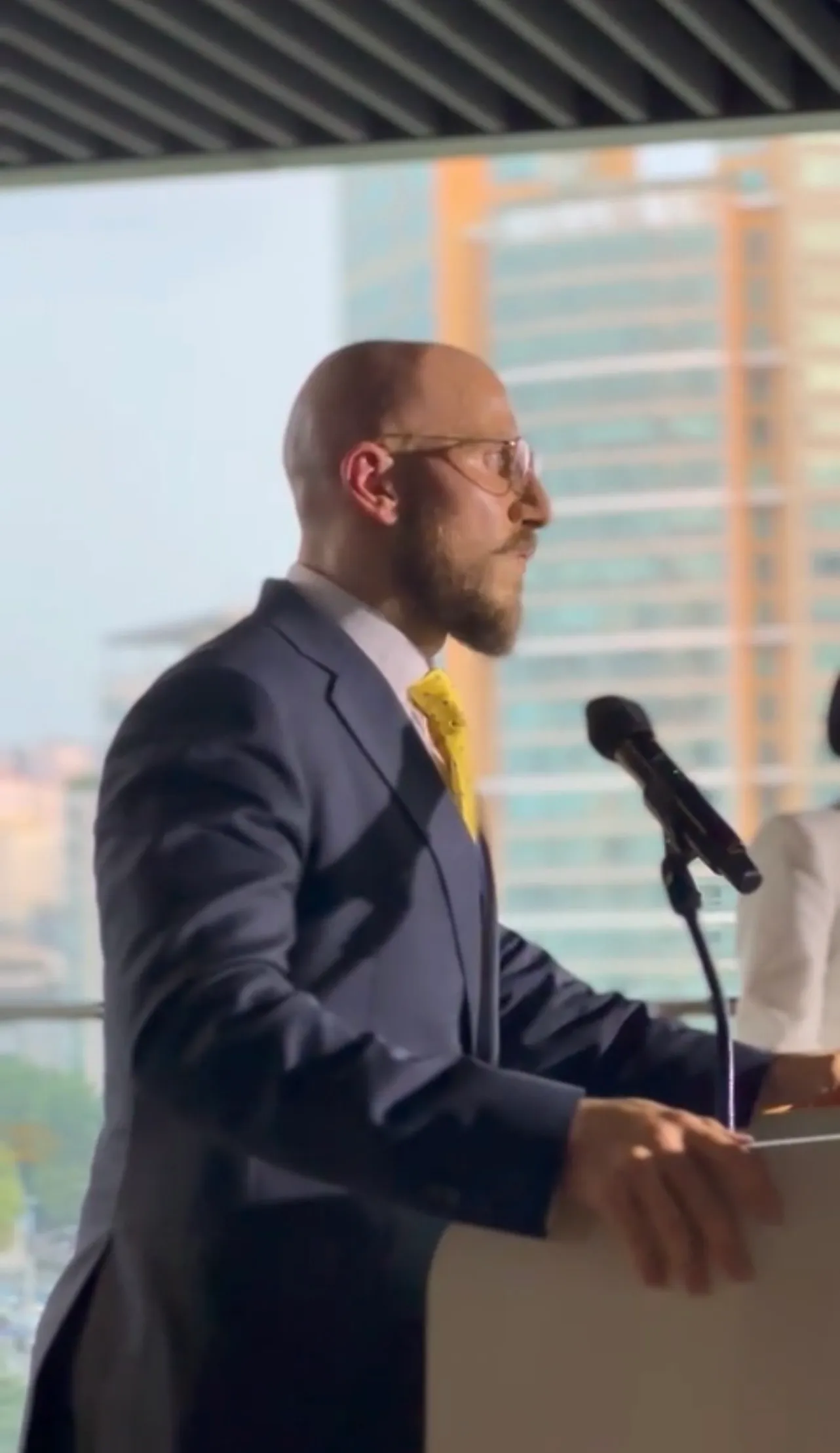
Nigeria should build up its medical schools and teaching hospitals rather than keep sending patients and their money abroad, the head of the country’s main tertiary education fund said, Premium Times reported. Sonny Echono, executive secretary of the Tertiary Education Trust Fund, said the federal government had told its agencies to put money into both medical training and hospital capacity so that fewer Nigerians travel for care. He was speaking on Tuesday as the chief of the air staff, Sunday Aneke, led a Nigerian Air Force delegation to the fund’s headquarters in Abuja.
The bill for going abroad
Nigeria loses about 2 billion dollars a year to outbound medical tourism, the Nigerian Medical Association estimates, Premium Times reported. Political figures are among those who travel, often to Britain, India, the United States and the United Arab Emirates, the same countries that recruit many Nigerian-trained doctors. The Central Bank of Nigeria records a much smaller number for the foreign exchange it sold for health services abroad. It cleared about 3.82 million dollars in 2023, down from 9.06 million in 2022, and about 2.41 million in 2024, a fall of 36.9 per cent on the year. Those two figures measure different things. The association’s estimate covers total spending on treatment abroad through every channel. The central bank’s covers only the formal currency it cleared for health services, and even that has shrunk.
Why the decline is not a cure
A smaller bill is not the same as a stronger system. Premium Times reported that the drop in recorded spending most likely reflects tight foreign exchange and the rising cost of travel, not any real gain in the care available at home. That distinction is the whole of the matter. Spending that falls because patients cannot get dollars records a barrier, not a better hospital, and it can climb straight back when the foreign exchange loosens. Outbound medical tourism will shrink for good only when Nigerians choose local care because it is good enough to trust, not because the trip abroad has become too dear. There are early signs of the harder kind of progress: in Lagos, a national orthopaedic hospital has begun to claw back outbound cases it once lost to surgeons overseas.
What TETFund is funding
Echono said TETFund was widening its help beyond university faculties to the teaching hospitals where students train. It would pay for accommodation for students on clinical placements and provide medical equipment, he said. The teaching hospitals are where students meet real patients, and TETFund wants them better equipped. The money should cover the four core courses of medicine, pharmacy, nursing and dentistry, and reach further, to “the provision of healthcare for our teeming population”, Echono said. He pressed too for the ranks below the doctors, the nurses, pharmacists and technicians whose numbers Nigeria must raise if its hospitals are to function. During the visit, Aneke asked the fund to back the Nigerian Air Force School of Medical Sciences and Aviation Medicine, as it had backed the Air Force Institute of Technology. Echono said he would make “a special case” to the fund’s board of trustees under a presidential scheme for medical equipment and facilities.
What to watch
The proof will be in budgets and buildings, not statements. If TETFund follows through, its equipment and accommodation will show up in named teaching hospitals within a year or two, the aviation medicine school will get its money, and the count of nurses, pharmacists and technicians will start to rise. One number is worth watching, the central bank’s: whether outbound medical tourism spending stays down after foreign exchange eases, or springs back the moment it does. Nigerians travel to India, Britain and the Gulf because those hospitals have earned their trust, and the domestic build will count only when it earns the same trust at home.